
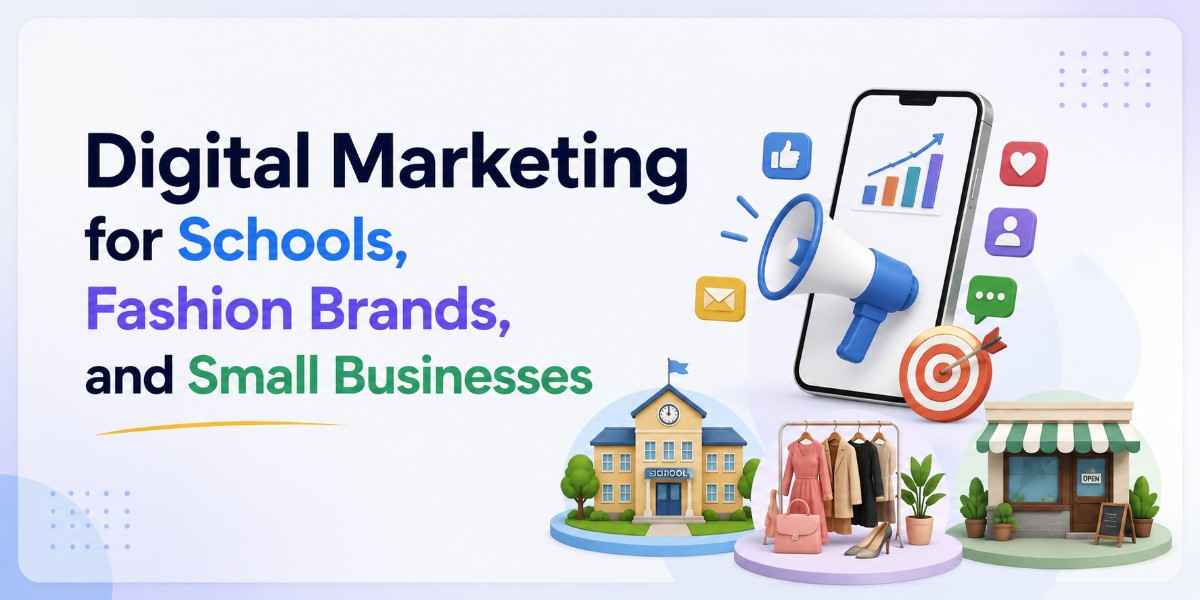
When you talk to a school principal trying to fill admission seats, a fashion brand owner trying to sell out a new collection, and a small shop owner trying to show up on Google. You’ll get three very different problems. But underneath all three is the same question: How do we actually get found online and get people to act once they find us?
That’s what digital marketing is supposed to solve. The catch is, there’s no single playbook. Digital marketing for educational institutes looks nothing like digital marketing for fashion brands, and what a small business needs from an affordable SEO plan is very different from what a large enterprise can throw money at. So instead of giving you generic advice, this guide breaks things down by situation.
The Basics About Digital Marketing
Digital marketing, at its core, is just using online channels—search, social media, email, and your website—to reach people and get them to do something: enroll, buy, book a call, or whatever your goal is. The advantage over old-school advertising is that you can actually see what’s working and adjust instead of guessing.
Most strategies pull from some mix of these:
- SEO — showing up in Google search results without paying for ads
- Paid ads — Google Ads, Meta Ads, and similar
- Social media — building a following where your audience already hangs out
- Content — blogs, videos, guides that answer questions and build trust
- Email/WhatsApp — staying in touch with people who’ve already shown interest
Now let’s get into the specifics.
Digital marketing for Educational Institutes
Parents don’t walk into a school anymore without googling it first. They compare fees, check reviews, look at placement records, maybe even watch a campus tour video before they’ve made a single call. So if your institute doesn’t show up well online, you’re already losing candidates you never even knew existed.
A few things tend to move the needle here:
- Local search matters more than people think. Searches like “best school near me” or “top coaching center in [city]” are happening constantly. Keeping your Google Business Profile updated, collecting reviews, and having proper location pages helps you show up when it counts.
- Answer the questions parents are actually asking. Fee structure, admission process, faculty background, results — write about these directly instead of vague “why choose us” pages. It builds trust faster than any ad.
- Video works surprisingly well. Alumni talking about their experience, a quick campus walkthrough, faculty introducing themselves — this kind of content tends to outperform polished brochures, especially on Instagram and YouTube during admission season.
- Time your ads around the admission calendar. Running ads year-round isn’t efficient. Concentrating spend around admission windows, with retargeting for people who visited but didn’t apply, tends to bring better results for less money.
- Don’t let leads go cold. Once someone fills an inquiry form, a simple follow-up sequence over email or WhatsApp — answering FAQs, reminding them of deadlines — keeps them from just disappearing.
Digital marketing for fashion brands
Fashion moves fast, and it’s a visual game before it’s anything else. That’s why Digital Marketing for Fashion & apparel brands focuses on creating a strong visual presence that captures attention instantly. People aren’t researching your brand the way they’d research a school—they’re scrolling, and either something catches their eye or it doesn’t.
Social media isn’t optional here. Instagram, Pinterest, and short-form video (Reels and TikTok) carry most of the weight. Real, lifestyle-style shots tend to outperform studio photography — people want to picture themselves wearing it.
Micro-influencers often beat big names. A creator with 20-30K genuinely engaged followers can sometimes outsell a celebrity post, simply because their audience trusts their taste more.
Your product pages need real SEO too. Detailed descriptions, size guides, and actual customer reviews help both your Google rankings and your conversion rate — people buy more when they’re not left guessing about fit.
Make it shoppable. Every extra click between “I like this” and “I bought this” loses you sales. Shopping tags on Instagram and Pinterest close that gap.
Ride the calendar. Festivals, seasons, trending styles — fashion is cyclical by nature, and pairing timely campaigns with retargeting ads for people who abandoned their cart usually pays off.
Affordable SEO for small business owners
This is probably the most common question we get: How do you compete with businesses that have ten times your marketing budget? The honest answer: you don’t need to outspend them; you need to out-strategize them. That’s exactly where Affordable SEO for Small Business makes the biggest difference.
Here’s where the money actually matters less than people assume:
- Google Business Profile is free, and most businesses barely use it properly. Photos, updated hours, responses to reviews — this alone often brings in more local traffic than a small ad budget would.
- Go after long-tail keywords, not broad ones. Nobody’s going to outrank Amazon for “shoes.” But “affordable running shoes for flat feet in [city]” has far less competition, and someone searching that is much closer to buying.
- On-page SEO costs nothing but time. Proper titles, meta descriptions, alt text on images, and linking your own pages together — small, unglamorous things that genuinely move rankings.
- Write content that answers real questions your customers ask you. Not filler blog posts — actual answers. This builds organic traffic that keeps paying off long after you’ve written it.
- Reviews and consistent listings matter more than people realize. Making sure your business name, address, and phone number match across every directory, and actively asking happy customers for reviews, is free and effective.
- Consider a freelancer instead of an agency. For most small businesses, a skilled freelance SEO specialist can deliver the same strategic thinking as an agency, minus the overhead and retainer fees.
Final Thought
Different industries, different tactics — but the underlying idea behind digital marketing doesn’t change. Know who you’re talking to, show up where they’re already looking, and put your effort into things that keep paying off over time (like SEO and content) instead of only chasing quick wins through ads.
If you want a strategy built around your specific business rather than a generic template, that’s exactly the kind of work we do at Pro SEO Freelancer.